
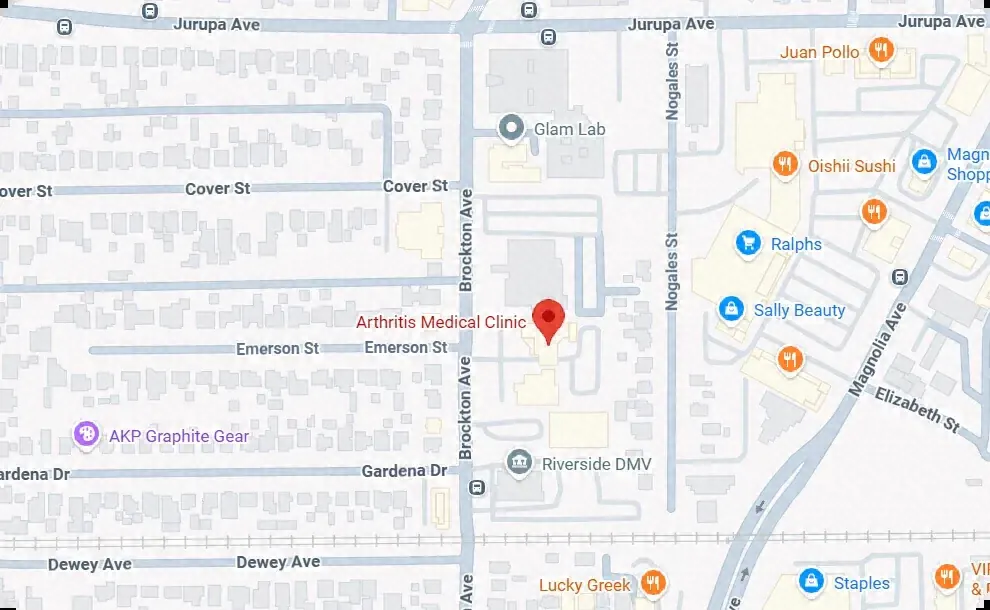
Riverside
6180 Brockton Avenue, STE 204Riverside, CA 92506
info@arthritismedicalclinic.org
Get Directions to Arthritis Medical Clinic RiversideMedical review pending
Gout is a type of arthritis that causes pain and swelling in your joints. It comes in flares that last a week or two and then go away.

Gout is a type of arthritis that causes pain and swelling in your joints. It comes in flares. A flare usually lasts a week or two and then goes away. Flares often start in your big toe or another part of your leg or foot.
Gout starts when a waste product called urate builds up in your body over a long time. The urate can form sharp, needle-shaped crystals in and around a joint. The crystals make the joint swell and hurt. Urate builds up when the body makes too much of it or gets rid of too little. Still, many people with high urate levels in the blood never get gout.
Gout can affect these parts of the body:
Gout can move through several stages:
Gout is one of the easiest kinds of arthritis to control. Early diagnosis, treatment and changes in daily habits all help. Many people stop having flares or have milder ones. Some even become gout free.
Many people get gout. It is more common in men than in women. It usually starts in middle age. Women rarely get gout before menopause, so they tend to get it later in life than men. Younger people get it less often. When they do, it tends to be more severe.
The most common symptom of gout is a painful joint. Many people have their first flare in one of their big toes. But gout can affect other joints too. Flares often start all of a sudden at night. The pain can be strong enough to wake you up. The joint may also look red and feel swollen and warm.
A flare usually affects one joint. Some things can set off a flare:
A flare usually gets better in a week or two. In between flares, you usually have no symptoms. Some people have flares often. Others may not have another one for years. But if gout is not treated, flares may come more often and last longer over time.
If gout goes untreated for a long time, tophi can form. A tophus is a hard lump of needle-shaped crystals. It forms under the skin, in and around the joints, and in other organs. At first, tophi do not hurt. Over time, they can become painful. They can also harm bone and soft tissue and change the shape of a joint.
People with gout may be more likely to have other health problems, mostly with the heart and kidneys. Common ones include:
Gout happens when urate builds up in your body and forms needle-shaped crystals in your joints. This causes pain, swelling and redness. It can also make the joint hard to move and use. But not everyone with high urate levels gets gout.
Urate comes from purines. Purines are found in your body’s tissues and in many foods. When purines break down, they turn into urate. Most of the time, urate leaves your body in your urine. But sometimes the body makes too much urate or removes too little. Then urate builds up in your blood, and crystals form in your joints. The crystals cause swelling and pain. These attacks are called gout flares.
Researchers are still learning how genes and the world around us lead to high urate levels. Some things raise your chances of getting gout:
Some health problems can raise your risk of gout:
Some medicines can raise your risk of gout:
Gout is often fairly easy to diagnose. But a few other conditions can look like gout. To find out if you have gout, your health care provider may:
Gout treatment can be different for each person. It depends on your symptoms and what is causing your gout. But the goals are the same for everyone:
Your doctor may suggest medicines that treat the cause of gout. You may also get medicines to treat a flare when it happens.
To treat a gout flare, your doctor may suggest:
Corticosteroids may also help. These strong medicines calm swelling and ease pain. You can take them by mouth, or your doctor can inject them into the joint. Because they are strong, your doctor will give you the lowest dose that works.
The cause of gout is hyperuricemia, which means too much urate in the blood. Treating it is a key part of treating gout. Some medicines lower urate levels:
Other treatment may include changes to your diet and daily habits. These lower the risks that you can control.
These health care providers may treat gout:
You can do many things to manage gout. Some changes in your daily life can help you have fewer flares and ease your symptoms:
The DASH eating plan means:
During a gout flare, these steps can ease your symptoms:
Some people have frequent flares or tophi. For them, changes in daily habits are not enough. Medicines that lower urate levels in the blood are the main treatment. Take these medicines regularly, just as your doctor prescribed. This is the key to stopping flares and to preventing or shrinking tophi. A healthy weight and diet still matter too. They lower the risk of heart problems, which are common in people with gout.
Always talk with your doctor before you change your diet or your medicines.
Source: National Institute of Arthritis and Musculoskeletal and Skin Diseases (NIAMS), NIH, last reviewed December 2023.
We Are Accepting New Patients!
info@arthritismedicalclinic.org
Get Directions to Arthritis Medical Clinic Riverside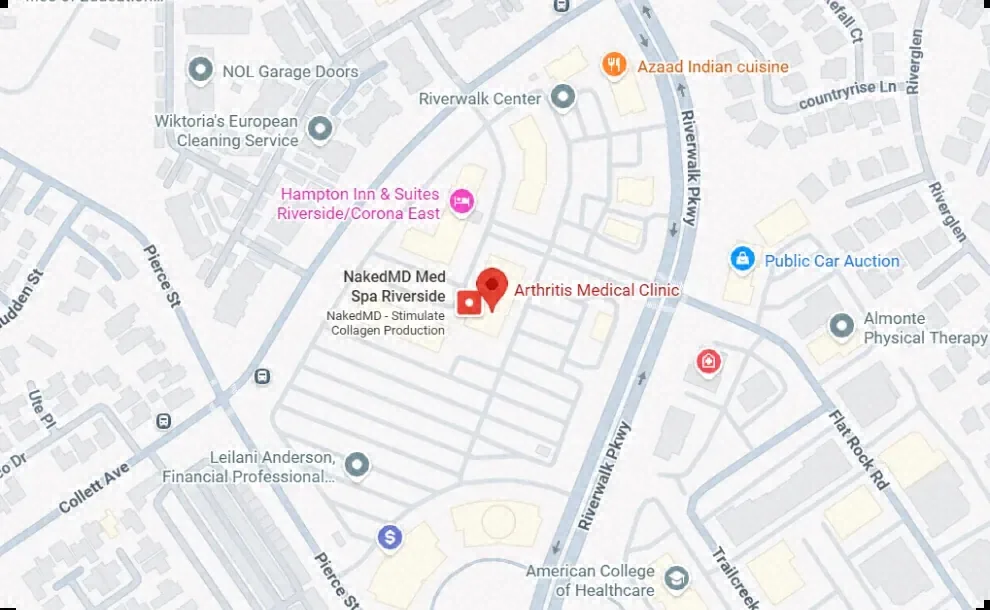
info@arthritismedicalclinic.org
Get Directions to Arthritis Medical Clinic La SierraPhones answered: Mon – Fri 9:00 AM – 5:00 PM
Wheelchair-accessible entrance and parking at every office.